CoQ10, if you're going to try it
Coenzyme Q10
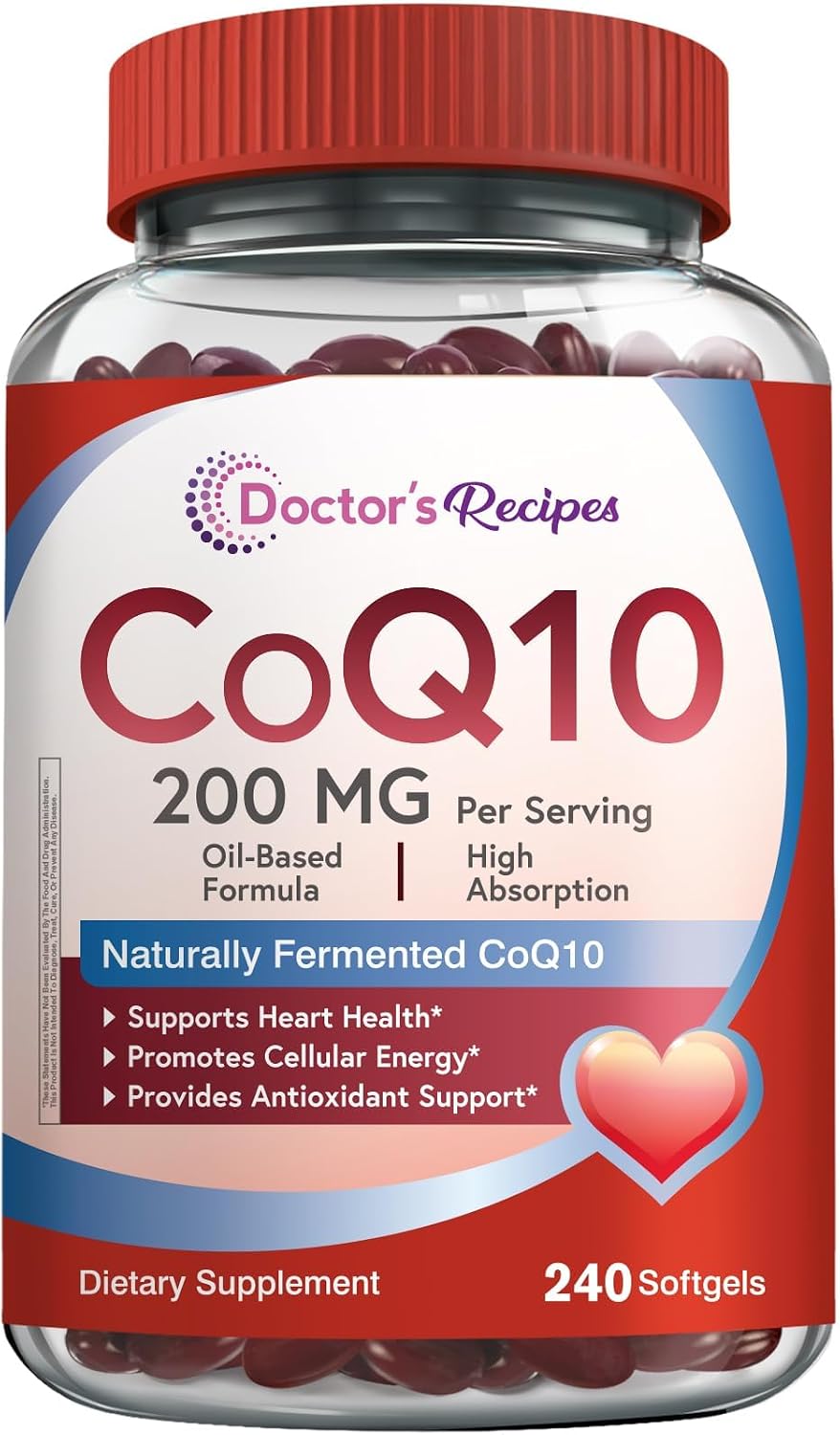
Ubiquinone or ubiquinol softgels
Your body makes CoQ10, and levels fall with age and on statins. The evidence for supplementing is mixed, and we say so.
Evidence C
What it is
CoQ10 is a compound your cells use to make energy, and it also works as an antioxidant. Your body makes its own, and you get small amounts from meat, fish and nuts. In a 1989 study of human organs, levels peaked around age 20 and fell after that; a 2016 study of 860 adults found blood levels lower in older people too. Statins, the common cholesterol drugs, block the same pathway the body uses to make CoQ10, and trials show they bring blood levels down. Whether topping it up makes you feel or work any differently is the open question.
Muscle aches on statins
This is the main reason people buy it, and the reviews disagree. A 2018 analysis of 12 small trials found less muscle pain, weakness and cramp with CoQ10 than with placebo. A stricter 2020 analysis of 7 placebo-controlled trials found no difference in muscle pain, and no difference in how many people stayed on their statin. The NIH says the overall evidence doesn't support it. If statins make your muscles ache, tell your doctor rather than trying to fix it yourself; there are other statins and doses to try.
Tiredness
The most promising signal. A 2022 review of 13 trials with about 1,100 people found CoQ10 eased tiredness a little more than placebo, both in healthy people and in people with long-term illnesses. Products with CoQ10 alone did better than blends, and larger amounts over longer periods did better than small, short ones. The effect was modest, and most of the trials were small.
Exercise
Not much. A 2025 review of 24 studies in healthy adults found CoQ10 reliably raised blood levels, but any effect on endurance was small and didn't hold up when the odd results were set aside. Strength and sprint performance barely changed, and one-off servings before exercise did nothing. The authors rated the evidence low to very low.
Skin
One small trial. In 2017, 33 healthy adults took a water-soluble form of CoQ10 or placebo for 12 weeks. Those on CoQ10 had slightly fewer fine wrinkles and smoother skin as measured by machine, but no change in skin moisture, thickness or sunburn. It hasn't been repeated with ordinary softgels.
How to choose
- Softgels made with oil; CoQ10 absorbs poorly from dry tablets. Have it with a meal that has some fat.
- Ubiquinone is cheaper and the form most trials used. Ubiquinol absorbed better in one 10-person trial, but not by a clear margin in a 21-person one, and your body turns ubiquinone into ubiquinol anyway. How the softgel is made seems to matter about as much as the form.
- Skip blends that promise energy or heart support. In the tiredness review, blends did worse than CoQ10 alone.
- Third-party tested (USP Verified or NSF).
Amounts
Commonly studied amounts: the absorption studies above used 100–200 mg a day and the skin trial 50 or 150 mg. The tiredness review found bigger effects with larger amounts. The NIH page has more on safety. Trials ran for weeks to months, so a few days won't tell you whether it does anything for you.
Watch out
- CoQ10 may make warfarin less effective. Don't start it on warfarin without your doctor.
- If you use insulin or other diabetes medicines, ask your doctor first: CoQ10 may affect them.
- If you're having cancer treatment, ask your cancer team first: CoQ10 may not be compatible with some types.
- It may add to the effect of blood pressure medicines.
- If you're on a statin for muscle aches, don't stop or change it without your doctor.
- Mild side effects include trouble sleeping and an upset stomach.
- Not well studied in pregnancy or breastfeeding.
The evidence Grade C
Mostly mechanistic or observational. We say so.
Supplements reliably raise CoQ10 in the blood. What that does for you is less clear: a modest signal for tiredness, mixed results for muscle aches on statins, little for exercise, and one small skin trial.
- NIH NCCIH: Coenzyme Q10
- Age-related changes in the lipids of human tissues (Kalén, Appelkvist & Dallner, 1989)
- CoQ10 in the blood of 860 European adults by age and sex (Niklowitz et al., 2016)
- Statins and blood CoQ10: meta-analysis of placebo-controlled trials (Banach et al., 2015)
- CoQ10 and statin-associated muscle symptoms: meta-analysis of 12 trials (Qu et al., 2018)
- CoQ10, statin-associated muscle pain and staying on statins: meta-analysis of 7 trials (Kennedy, Köller & Surkova, 2020)
- CoQ10 and fatigue: meta-analysis of 13 trials (Tsai et al., 2022)
- CoQ10 and exercise performance in healthy adults: meta-analysis of 24 studies (Deng et al., 2025)
- CoQ10 and skin: randomised placebo-controlled trial in 33 adults (Žmitek et al., 2017)
- Absorption of three CoQ10 products in adults aged 65–74 (Pravst et al., 2020)
- Ubiquinol and ubiquinone in older men: crossover trial (Zhang et al., 2018)
Last reviewed 2026-10-24.
These statements have not been evaluated by the Food and Drug Administration. This product is not intended to diagnose, treat, cure, or prevent any disease.