A creatine that's just creatine
Creatine monohydrate
Unflavoured powder
Best known for the gym, but your brain runs on it too, and the cheapest kind is the right kind.
Evidence B
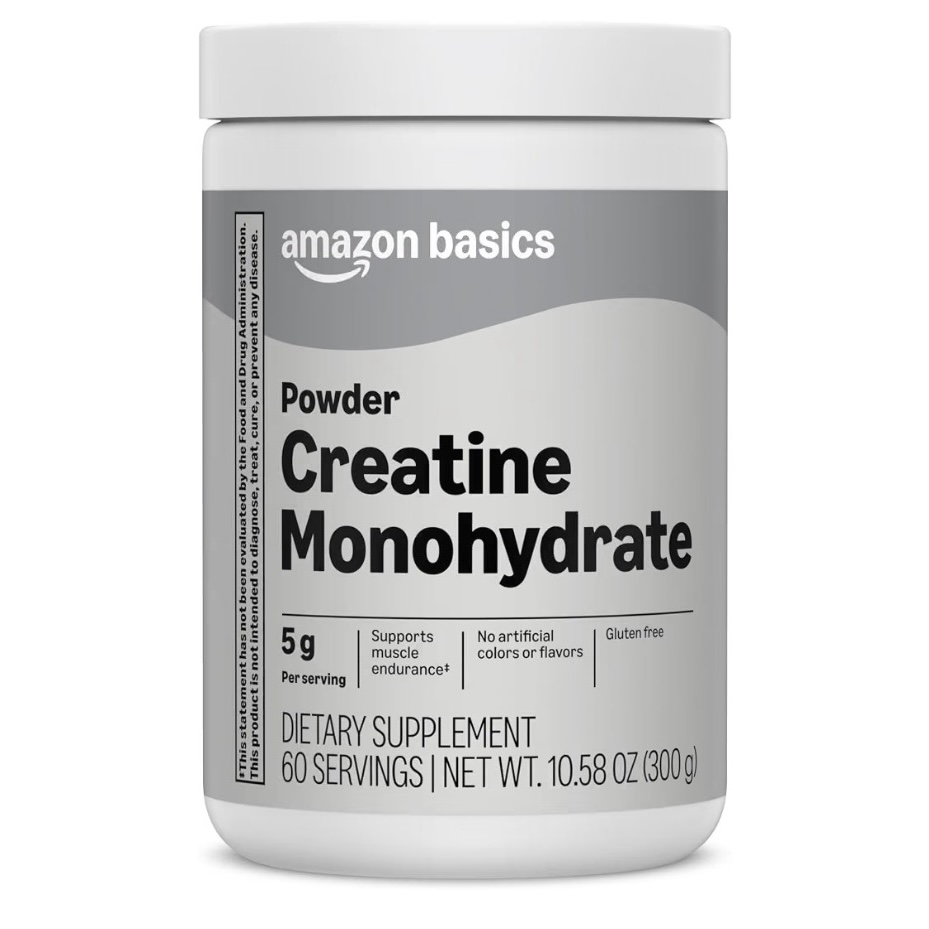
What it is
Creatine is a compound your body makes and also gets from meat and fish. It's a quick energy reserve for cells that work in bursts: muscles, and the brain. The gym side is well settled; this page is about the brain.
Memory and focus
A 2024 review of 16 trials found small improvements in memory, attention and processing speed, but not in overall thinking or planning. An earlier memory review, once its numbers were corrected, found the effect only in older adults. Supplements raise creatine in the brain less than in muscle, which may be why results vary.
Short on sleep
In a 2024 study of 15 adults kept awake for 21 hours, one large serving of creatine improved memory tasks and processing speed against placebo, and partly offset the brain-energy changes that come with sleep loss. It didn't make anyone sharper than a good night's sleep would; it's one small study and hasn't been repeated yet.
Sleep itself
There's very little here. One six-week study of 21 women who strength trained found more total sleep on training days with creatine, and no change in how well they rated their sleep. Read it as a hint, not a reason to buy.
If you eat little or no meat
Vegetarians and vegans get almost no creatine from food, so they have less stored in their muscles. In one trial of young women, those on a vegetarian diet were the ones whose memory improved on creatine. Brain levels look similar either way, because the brain mostly makes its own.
How to choose
- Creatine monohydrate, and nothing else in the tub.
- Unflavoured powder: no sugar and no "blends".
- A third-party mark (NSF Certified for Sport, Informed Sport) if you compete.
- Skip the "advanced" forms (HCl, buffered, ethyl ester) and "brain" formulas. They cost more and have less evidence.
Amounts
Commonly studied daily amounts are 3–5 g. Brain studies often used more, and the sleep study used a one-off high amount its own authors warn against copying. The ISSN position stand has the details.
Watch out
- Talk to your doctor first if you have kidney disease or take medicines that affect the kidneys.
- Talk to your doctor first if you have bipolar disorder: there are reports of creatine linked to manic episodes.
- Very large one-off amounts, like the one in the sleep study, put extra load on the kidneys.
- A kilo or so of early weight gain is water in the muscle, not fat.
The evidence Grade B
Some human trials, but small or mixed.
For memory and focus the trials are small and mixed: the clearest signals are in older adults, people who eat little meat, and a short study of sleep-deprived adults.
- Creatine and cognitive function in adults: meta-analysis of 16 trials (Xu et al., 2024)
- Creatine and memory in healthy people: meta-analysis (Prokopidis et al., 2022; corrected 2023, effect held in older adults)
- Single dose creatine and cognitive performance during sleep deprivation (Gordji-Nejad et al., 2024)
- Creatine and cognitive functioning in vegetarians and omnivores (Benton & Donohoe, 2011)
- Creatine and total sleep in women who strength train (Aguiar Bonfim Cruz et al., 2024)
- ISSN position stand: creatine (Kreider et al., 2017)
- Common questions about creatine (Antonio et al., 2021)
Last reviewed 2026-10-24.
These statements have not been evaluated by the Food and Drug Administration. This product is not intended to diagnose, treat, cure, or prevent any disease.