A spoonful of nutrients for breakfast
Wheat germ
Toasted or raw, refrigerated
The heart of the wheat kernel: protein, fibre, B vitamins, vitamin E, and more spermidine gram for gram than any other food tested.
Evidence C
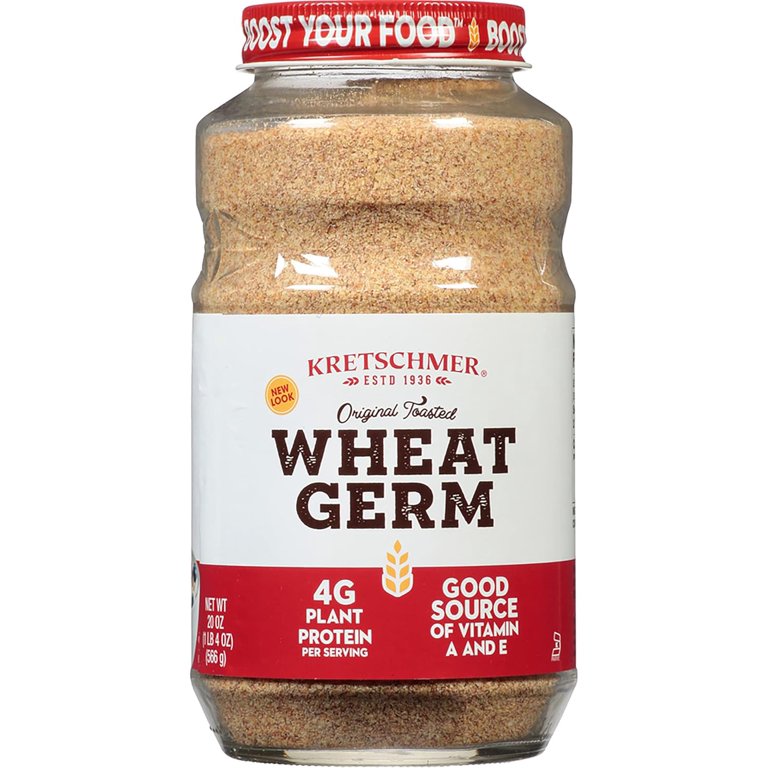
What it is
Wheat germ is the part of the grain that would grow into a new plant. Milling strips it out of white flour. Sold on its own, it's a cheap way to add protein, fibre, folate, thiamin and vitamin E to oats, yoghurt or baking.
Why it's here
Wheat germ is the richest food source of spermidine that's been measured, a compound found in every living cell. A 2021 analysis of foods found more polyamines (the family spermidine belongs to) in wheat germ than in anything else tested, several times the level in mushrooms, peas or aged cheese. Because you eat it by the spoonful, a serving holds a few milligrams: a similar amount to a bowl of mushrooms or peas, not far more. It's an easy way to add some to breakfast; just don't expect it to do what the headlines say.
How to choose
- Toasted keeps longer; raw tastes milder.
- A sealed jar, refrigerated after opening: its oils go rancid.
- Fresh wheat germ smells nutty, never bitter.
Watch out
- Contains gluten: not for people with coeliac disease or a wheat allergy.
The evidence Grade C
Mostly mechanistic or observational. It's food, so that's fine; we just say so.
The nutrients are well measured. So is spermidine: in a lab analysis of 109 foods, wheat germ came out highest by weight. What spermidine does in people is far less certain. It helps cells clear out and recycle their own worn parts, and most of the interest comes from studies in yeast, worms, flies and mice. In people, one long-running Italian study found those who ate the most spermidine died less often over 20 years, but that kind of study can't show cause and effect. A 12-month trial of a wheat germ spermidine supplement in older adults found no improvement in memory.
- USDA FoodData Central (nutrient data)
- NIH ODS: Vitamin E fact sheet
- Polyamines in foods: wheat germ highest of those tested (Muñoz-Esparza et al., 2021)
- Polyamines in foods: a food database (Atiya Ali et al., 2011)
- Review: spermidine in health and disease (Madeo et al., 2018)
- Observational study: dietary spermidine and mortality, Bruneck (Kiechl et al., 2018)
- Trial: wheat germ spermidine supplement and memory, SmartAge (Schwarz et al., 2022)
Last reviewed 2026-10-23.